Coast to Coast is the first track on Elliot Smith's final, posthumous album "From a Basement on a Hill," and it sets the tone for the rest of the album: disjointed, dense, fraying and beautiful.
http://www.youtube.com/watch?v=bAvqZsRhjwk&fmt=6
Coast to Coast begins with a portion of the song played in reverse. Enter twin lumbering drum tracks and an out of tune slide guitar lead. I've listened over 50 times and just now realized that Elliot's whistling along with the guitar track. His first line: "Last stop for a resolution."
The lyrics are juvenile, but cognizant and self-examining. Elliot has no new ideas and is therefore useless to those who are expecting more (including you!). Instead of deliberate invention, he takes a "kitchen sink approach," and shovels all of his recording and songwriting reserves into the studio cauldron (did he know beforehand that this would be his final effort?).
This "kitchen-sink" approach explains why there's at least 3 guitar tracks, a piano track, a distorted bass, 2 drum tracks, 3 separate vocal tracks, several additional "background" tracks featuring a lightning-speed poetry reading (and whistling). It's chaotic, but its beauty is evident in the way "Coast to Coast" grows and reveals itself with every subsequent listen.
At any moment, the wheels could detach from the wagon and the barely-together instruments which compose the song could careen into the abyss. Yet "Coast to Coast" marches ahead with minor regard for refrain or repetition, as Elliot bemoans that he's "got no new act to amuse you." Its structure is unconventional, and the rapidity of changes suggests a songwriter who is easily bored, or seeking to outdo himself. The droning piano, which would normally have a centering effect, somehow edges us closer to the brink.
At around the 4 minute mark, the poetry track which was submerged in the mix bubbles up. Is it the outside world leaking in? The spoken words supplant us from a musical trance, especially if we reacted to them by yanking off our headphones.
As the instruments slide into a black hole, these voices take over, and the track ends. We missed the last stop; nothing is resolved.
Showing posts with label creative. Show all posts
Showing posts with label creative. Show all posts
Friday, April 1, 2011

Wednesday, January 28, 2009
Company Profiles
Ever since working for software companies which were spinoffs of other software companies which were spinoffs of other software companies, I've wondered what a tech company family tree would look like.
Although it runs slowly in the browsers I've tried, this map reveals an amazingly thorough time and space relationship graph for Puget Sound tech companies.
On top of this, LinkedIn has beefed up their company profile pages with illuminating statistics such as incoming and outgoing career paths. Plus, statistics on median age of employees and breakdown of which titles constitute which percentage of company employees sheds light on facts which previously would have required some form of insider knowledge.
Now, for example, I know that prior to joining Microsoft, employees often worked for HP or Oracle, and after leaving tend to arrive at Amazon or Yahoo. I also learned that median age of a Microsoft employee is 34 years old and 13% of its nearly 90,000 employees are software engineers.
Its juicy information like this which I covet for visualization purposes--perhaps simultaneously depicting the flow of workers in and out of a company as well as size and age. I'll have to see if I can snag myself an API partnership.
Tuesday, December 23, 2008
Python Imaging Library
I've been diving into Python and trying to craft short little programs to improve my skillz.
One of the first Python extensions I made a move for was the Python Imaging Library. The PIL packs in an impressive amount of file format compatibility; loading and creating images could hardly be simpler.
For 90% of your typical use cases I'd say PIL does great, since loading saving and doing simple transformations on images is ridiculously simple. The PIL even supports drawing directly on images with polygons and other primitives. This is where my list of annoyances begins.
When you're drawing on an image, it seems only natural to desire transparency of shapes. Strangely, this is not possible. After some digging it seems the closest hack is to draw on a buffer image and then blend() or paste() with the original to achieve transparency. This is alright as long as the number of shapes are limited.
However, if you're trying to create multi-layered vector art, PIL isn't really up to the task.
In order to achieve the incremental layering of these shapes with true alpha values, I had to write my own pixel-by-pixel merge function, which was ridiculously slow. I'm sure there might have been a better way to do it but I found some of the documentation lacking, and on further investigation it's just literal comments from the source code, with few usage examples.
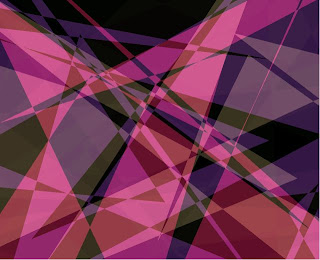
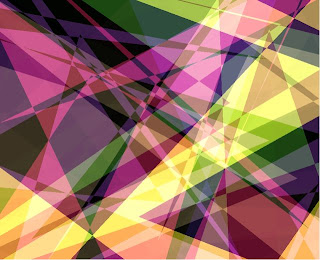
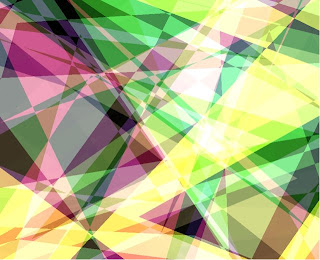
The above images took about a minute each to render, so there goes my plan to create a fun hill-climbing afternoon evolutionary image grinder. I might give this another stab with some Python OpenGL libraries.
One of the first Python extensions I made a move for was the Python Imaging Library. The PIL packs in an impressive amount of file format compatibility; loading and creating images could hardly be simpler.
For 90% of your typical use cases I'd say PIL does great, since loading saving and doing simple transformations on images is ridiculously simple. The PIL even supports drawing directly on images with polygons and other primitives. This is where my list of annoyances begins.
When you're drawing on an image, it seems only natural to desire transparency of shapes. Strangely, this is not possible. After some digging it seems the closest hack is to draw on a buffer image and then blend() or paste() with the original to achieve transparency. This is alright as long as the number of shapes are limited.
However, if you're trying to create multi-layered vector art, PIL isn't really up to the task.
In order to achieve the incremental layering of these shapes with true alpha values, I had to write my own pixel-by-pixel merge function, which was ridiculously slow. I'm sure there might have been a better way to do it but I found some of the documentation lacking, and on further investigation it's just literal comments from the source code, with few usage examples.


The above images took about a minute each to render, so there goes my plan to create a fun hill-climbing afternoon evolutionary image grinder. I might give this another stab with some Python OpenGL libraries.
Sunday, November 2, 2008
Hello world first post etc.
Ah it's the fresh new blog smell. Love the smell of that new blog.
Here's a stop motion animation video we made for no good reason. It was lots of fun to create and also to make music for, and escalated quickly after some faces were drawn on fruit. May be mildly traumatizing:
Untitled from . . on Vimeo.
Here's a stop motion animation video we made for no good reason. It was lots of fun to create and also to make music for, and escalated quickly after some faces were drawn on fruit. May be mildly traumatizing:
Untitled from . . on Vimeo.
Subscribe to:
Posts (Atom)

 Posts

